
Chimeric antigen receptor (CAR) T cell therapy has been transformative for multiple myeloma (MM), with contributions from our work and the work of others. Together with bispecific T cell engagers (TCE), these T cell redirection therapies are the new state-of-the-art for management of relapsed/refractory MM and are being evaluated in earlier lines of therapy. However, despite high response rates, relapse remains the largest challenge. This is especially true for patients with t(4:14); although response rates are still high, they are less durable than for standard-risk patients. Most commonly, especially with cell therapy, relapse is not due to antigen loss but occurs after the cessation of functional T cell persistence. A second challenge with CAR T and TCE therapies are toxicities such as cytokine release syndrome (CRS) that require hospitalization and severely limit accessibility of these therapies outside of major academic centers. Our proposed concept is to engineer cell therapy factories that will improve durability of responses with less acute toxicity profiles leading to a double win for the therapeutic window of immunotherapy.
HSC engineering leveraging site-specific CRISPR knock-in to generate cell type-controlled expression CAR-effector factory
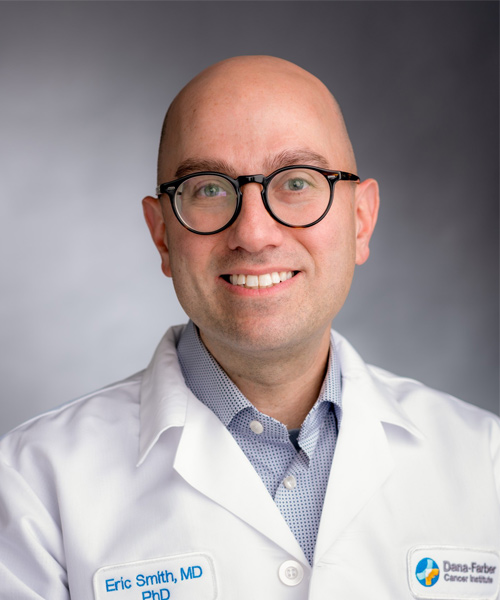
Eric Smith, MD, PhD
Director of Translational Research, Immune Effector Cell Therapies
Dana-Farber Cancer Institute, Boston, MA
Assistant Professor, Harvard Medical School

Dr. Smith’s group aims to capitalize on his experience pre-clinically developing CAR’s with high clinical efficacy for MM (Arlo-cel; Orva-cel) to develop a novel cell therapy platform. Like Dr. Wiita’s team’s project, the goal is to develop single administration long-lived therapies. Here, the team is leveraging hematopoietic stem cells (HSC’s) property of continuous renewal as the starting material for such an evergreen cell therapy platform. The Smith group is using site-specific CRISPR knock-in to control expression to specific immune effector lineage of interest. Working closely with the Wiita team, the final product will include a small molecule “on” inducible “armor” that will control when this evergreen cell therapy is active, or, if patients reach persistent MRD status, it can be turned off, with the capability of turning on again if biochemical relapse is detected. The CARs will be chosen to target antigen(s) of high prevalence in t(4;14) MM.
Advancing STEALTH (Secreted Therapeutics from Engineered Adipocytes as Living Tissue pHarmacies) as a platform for in vivo, controllable delivery of TCE therapy for t(4;14) MM
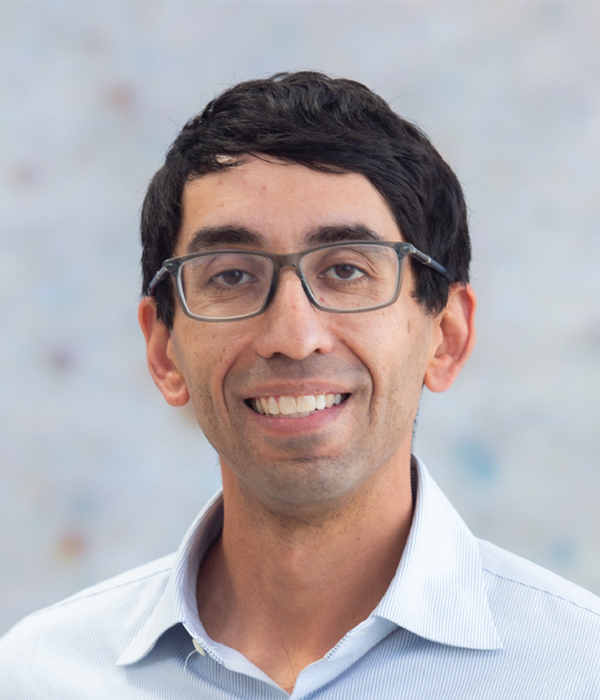
Arun Wiita, MD, PhD
Professor
Dept. of Laboratory Medicine
Dept. of Bioengineering and Therapeutic Sciences
University of California, San Francisco
Dr. Wiita’s group aims to develop an innovative new concept in t(4;14) therapy: the engineering of adipocytes (fat cells) to secrete T-cell engaging antibodies (TCEs) and other protein therapeutics. The goal of this design is to create a ”living pharmacy” that will be under the control of an orally bioavailable small molecule drug to lead to therapeutic TCE production from the implanted, engineered adipocytes. Ideally, this approach will allow for a safer, modular, less expensive, more durable, and more accessible means of administering this promising class of therapies for t(4;14) MM. In collaboration with the Smith group, part of the project will also involve the generation and evaluation of new TCEs that will target surface antigens preferentially expressed in t(4;14) MM.