
Romane Cathelin
Romane Cathelin is a Bioinformatics Programmer at the Applied Bioinformatics Labs and Precision Medicine program at NYU Langone. She earned her MSc in Bioinformatics from the University of Bordeaux, France. Her research centers on the role of chromatin organization in cancer, with a particular focus on leveraging machine learning techniques to enhance our understanding, diagnosis, and treatment of the disease.
As a 2024 recipient of the MSF Fellowship, Romane will concentrate on identifying clonal-specific chromatin organization in tumors using deep learning approaches. Her goal is to pinpoint and target aggressive or treatment-resistant clones. She will be mentored by Dr. Aris Tsirigos and Dr. Gareth Morgan throughout this work.
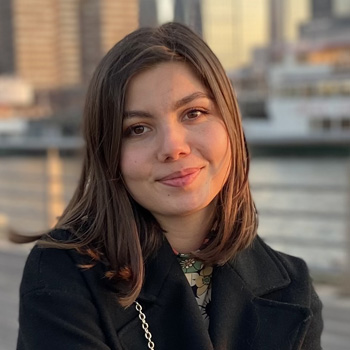
Romane Cathelin, MSc

Michael Durante
Michael is a Hematology/Oncology Fellow at Sylvester Comprehensive Cancer Center, part of UHealth – the University of Miami Health System, and Jackson Memorial Hospital as part of the Physician Scientist Training Program. He completed his MD/PhD training at the University of Miami’s Medical Scientist Training Program in cancer biology with over 20 peer-reviewed publications. He has been a part of Drs. Landgren and Maura’s computational myeloma laboratory since 2022 and is a co-author in numerous publications including journals such as Nature Medicine and Journal of Clinical Oncology. Michael seeks to apply his extensive computational expertise to develop and utilize cutting-edge computational models to predict disease progression, treatment responses, and outcomes for individuals with high-risk multiple myeloma. Michael has a special interest in identifying mechanisms of resistance in multiple myeloma patients undergoing modern targeted and cellular immunotherapies. Michael’s fellowship mentors are C. Ola Landgren, MD, PhD and Francesco Maura, MD.
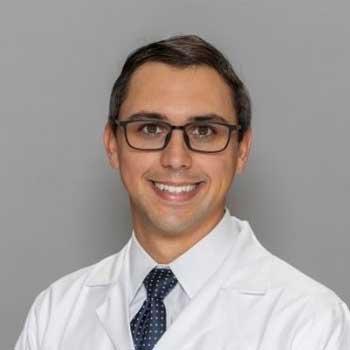
Michael Durante, MD, PhD

Minghao Dang
Minghao earned his Ph.D. in 2017 from the Institute of Biophysics, Chinese Academy of Sciences. Following his initial postdoctoral training, Minghao joined Dr. Linghua Wang’s lab at MDACC in 2019 where he received comprehensive training in applying innovative bioinformatics approaches to dissect the tumor ‘ecosystem’; deeply profiling tumor cells, cells of the tumor microenvironment (TME), and exploring tumor-immune stroma crosstalk at single-cell resolution across many cancer types. Since 2020, Minghao has focused his research in multiple myeloma (MM), contributing to several projects such as the single-cell profiling of BCMA naïve vs. refractory relapsed MM patients (ASH 2022), integrative genomic and transcriptomic profiling of MM precursors in a prospective longitudinal observational study (AACR 2023), single-cell multi-omic data analysis of TME evolution across the disease spectrum of MM (ASH 2023), and single cell multi-omic data analysis of clonotypic and transcriptional evolution of MM precursor disease (Cancer Cell 2023).
As a recipient of the MSF Fellowship in 2024, Minghao is now an Associate Data Scientist under the mentorship of Dr. Linghua Wang and Dr. Robert Orlowski. Minghao’s research as an MSF Fellow will focus the use of single cell multi-omics data analysis to dissect tumor heterogeneity, tumor evolution and dynamics of TME remodeling during the progression of multiple, with special attention to the t(4;14) subtype.
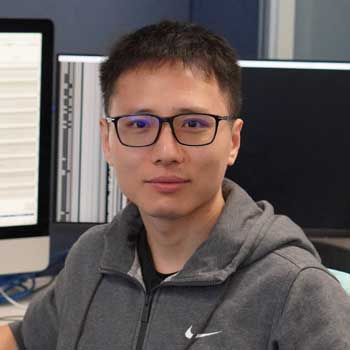
Minghao Dang, PhD

Marina Michaud
Marina is a PhD candidate in the Cancer Biology PhD program at Emory University, where she began training under Dr. Manoj Bhasin in 2023. Her research primarily centers on applying single-cell and spatial transcriptomics to map the landscape of the tumor microenvironment across diverse cancers, aiming to identify novel biomarkers and therapeutic targets. In 2024, Marina extended her studies to multiple myeloma (MM) as a member of the MMRF Immune Atlas Consortium, contributing to the elucidation of intercellular communication in the MM bone marrow immune microenvironment. She has also contributed to several other MM studies, focusing on the longitudinal profiling of immune microenvironment therapy responses, applying deep learning to distinguish between healthy and malignant plasma cells during myelomagenesis, and pioneering genome-wide spatial transcriptomic mapping of MM biopsies at single-cell resolution.
As a recipient of the MSF Computational Biology Fellowship in 2025, Marina’s work centers on investigating the role of the noncoding transcriptome of the MM bone marrow microenvironment to identify novel, noncoding elements that drive aggressive myeloma cell phenotypes and immune dysregulation with a specific focus on t(4;14) myeloma. To do so, Marina developed a novel systematic approach for integrated analyses of the coding and noncoding transcriptomes using existing sequencing data.
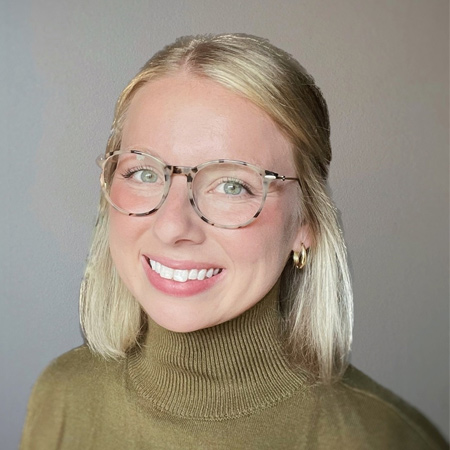
Marina Michaud
Denis Ohlstrom
Denis is an MD/PhD student in the joint biomedical engineering program at Emory University and the Georgia Institute of Technology. His training in bioinformatics began at the University of Colorado Anschutz Medical Campus (2018–2020), where he completed his master’s degree working with Dr. Dan Sherbenou. There, he studied intra-patient heterogeneity of malignant plasma cells in multiple myeloma (MM) and their contributions to monoclonal protein production and osteolytic lesion formation.
In 2023, Denis joined Dr. Manoj Bhasin’s lab, studying the dynamics of MM and the bone marrow immune microenvironment using single cell RNA sequencing of longitudinal biopsies across diagnosis, response to induction therapy, and eventual disease progression. As a recipient of the MSF Fellowship in 2025, his research focus will be on utilization of spatial multi-omics to characterize interactions between t(4;14) MM and its immune microenvironment from diagnosis through disease progression.
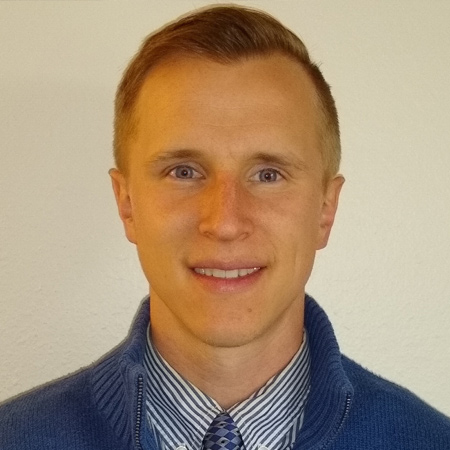
Denis Ohlstrom
Gulzar N. Daya
Mentor: Bob Orlowski
Gulzar is a Ph.D. student in Quantitative Sciences at UTHealth MD Anderson Graduate School of Biomedical Sciences (GSBS). She received her B.Sc in Biology from Loyola University Chicago and her M.Sc in Biomedical Informatics from the U. Chicago. In the Orlowski Lab, Gulzar leads a systems biology–driven research project in multiple myeloma. Her work integrates clinical trial data with experimental models using multimodal approaches, including single-cell RNA sequencing, spatial transcriptomics, and microbiome profiling. Her research focuses on defining how specific transcriptional programs and cell–cell interactions within the bone marrow microenvironment enable minimal residual disease and drive relapse in multiple myeloma. Her works overriding goal is to identify measurable biomarkers and actionable therapeutic targets.
Project: An Integrative Analysis of the Tumor Microenvironment in the Progression of Multiple Myeloma
Gulzar’s research builds upon previous research on the five foundational TME ecotypes started at MDACC by MSF Computational Biology Fellow, Dr. Minghao Dang. Her research plans to extend that earlier discovery work by mapping and validating the five ecotypes across the full disease spectrum, from MGUS and SMM through to relapsed and refractory multiple myeloma. Gulzar’s research will now build on upon that initial research by spatially confirming the tissue organization of these 5 ecotypes using spatial transcriptomics. These findings will be validated across patient samples using AI-driven models applied to H&E and IHC-stained slides (i.e. digital pathology), enabling establishment of a discovery and validation pipeline.
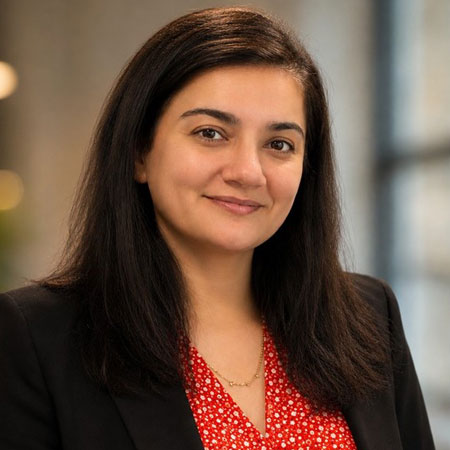
Gulzar N. Daya, MSc
Rucha Deo
Mentor: Arun Wiita, Tanja Lortemme
Rucha Deo is a Bioinformatics Programmer in the Wiita Lab at the University of California, San Francisco (UCSF), where she develops computational approaches for cancer immunotherapy. She holds master’s degrees in biotechnology and bioinformatics. Her work uses generative deep learning methods, including generative protein design and protein language models, alongside structural bioinformatics, toward the development of new therapeutic strategies.
Project: Computational Design of De Novo Protein Binders Targeting CD70 and CD48 for t(4;14) Myeloma Immunotherapy
Rucha is designing a library of de novo protein binders directed at immune surface proteins relevant to t(4;14) multiple myeloma. These binders are intended to act as compact, programmable antigen-recognition domains that engage disease-relevant and conformation-specific targets. Through high-throughput experimental assays, her project will evaluate these binders and relate functional outcomes to computational design features such as binding geometry and target engagement.
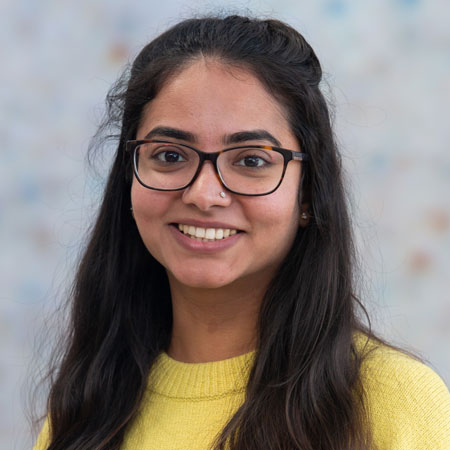
Rucha Deo, MS, MS
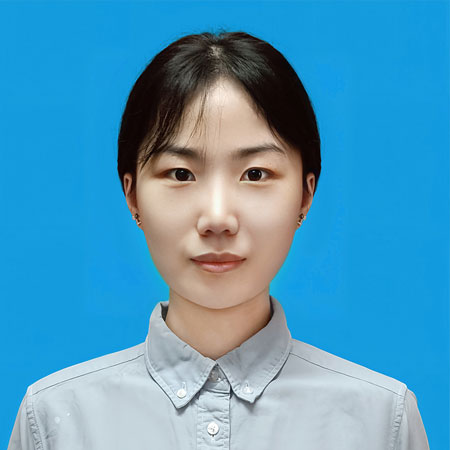
Yuling Ma, PhD
Mentors: Ioannis Vlachos, Dimitra Karagkouni
Yuling is a computational biologist at Beth Israel Deaconess Medical Center (BIDMC). She earned her PhD in Oncology in 2022 from Peking Union Medical College and Tsinghua University, where she developed expertise in cancer multi-omics analysis.
Yuling joined Dr. Vlachos’ lab at BIDMC in 2022, and has applied single-cell, regulatory genomics, and antigen-discovery approaches to study the multiple myeloma microenvironment, contributing to projects in single-cell immunoprofiling across blood and bone marrow, immune dysregulation in high-risk myeloma, and single-cell mapping of antigen-specific T-cell responses. She has developed novel approaches to study how genetic and regulatory variation shape gene expression programs and the immune landscape in cancer.
Project: 3’-UTR immune Landscape: Quantitative Trait Loci as Drivers of Immune Evasion and Progression in Multiple Myeloma
Yuling will integrate gene expression regulation, antigen discovery, and single-cell immunoprofiling to identify mechanisms of immune evasion across both clinically and genetically defined multiple myeloma subgroups, with a specific focus on high-risk t(4;14) myeloma. Her research aims to identify regulatory and antigen-associated programs that influence the tumor-immune cell interactions, with the potential to identify therapeutic targets and biomarkers for improved patient stratification.
Yuling Ma, PhD